Thursday, May 31, 2012

The Dormant Power of the Ancient Arts

The Dormant Power of the Ancient Arts

Jean Louise Quino/Diabetic Products


If we look back to a time when medical science and technology was still in its primordial state, we will find that our forefathers relied mostly on arts and not on science..

Experiments were never heard of at that time. Some viewed the world through myths and stories while some saw the world through metaphysics. Back then, answers to their innermost questions came from within their souls and not from a conclusion based on isolated observations of the outside world..

Echoing Henry Ward Beecher's, "Every artist dips his brush in his own soul, and paints his own nature into his pictures", the ancients back then drew answers from their own soul which was who they naturally and truly were.

The ancients believed that everything in nature is interconnected and none is totally isolated from the whole. This belief is reflected in almost all of the world's diverse cultures such as Hinduism, Buddhism,Taoism and Jainism.

The ancient artists were believed to have done 'supernatural' things like healing the sick by just 'channeling' the flow of 'chi' or 'chakra' in their bodies. Still some others received spiritual revelations and prophecies about the future. Not surprisingly, most of the masters of these arts were solitary beings who spent most of their time alone in deep meditation.

Today, along with the rise of reliance on scientific discoveries coming from empirical observations came the gradual and subtle perversions on the power of these ancient arts. For example, the spiritual art of the Kama Sutra is now obviously reduced to a set of sex positions which is quite contrary to what it taught about the sacredness of the union of male and female elements in the universe. Another example is the labeling of ancient arts healers as quack doctors for lack of scientific evidence to back their practices.

There are four underlying principles which led to the perversion of these ancient arts:

The assumption of perception as a fact
The conventional thinking about facts as of today is "To see is to believe." This assumption of perception as a fact is the same as the proclamation of the infallibility of the observers. This principle negates the significance of the bias in the observer's perception.

Physicist Jeremy Hayward states otherwise, saying "We perceive what we already believe to exist and we perceive it in the way we believe it to exist". This perversion of the arts is contrary to what the ancient artists believe that perception is not a fact but a reflection of the belief of the believer whose mind keeps him from seeing what doesn't fit.

The fragmentation of thinking
The Newtonian science aims to reduce everything into its smallest component part in order for it to make sense. This would lead to the next step which is regarding of those parts as discretely separate entities. An example of this was the mindset at a time when people believed that electricity and magnetism are two different and unrelated forces until Michael Faraday discovered the electromagnetic lines of force. As Jeremy Hayward points out, "The tendency to regard the world as made up of separate entities, things, having their own separate existence and identity and only accidentally related to other "things" is perhaps one of the most deep-rooted characteristics of human thought." This fragmentation of thinking is quite contrary to the wisdom of the old that says all things are related and interconnected to one another.

The reliance on empirical ordinance
Empirical evidence reduces the facts about the world - behavior and its causes included - into things which can be observed and measured.. This consequently negates that which is not observable or quantifiable. For example, concepts like "mind" and "thought" have been reduced to no more than those chemical and electrical components of the brain which can be measured and observed through an apparatus. This led to an apparent denial of the power of the mind to influence body behavior which is the bread and butter of most ancient arts of meditation. This denial of the ancient wisdom is demonstrated by strong resistance of most doctors to the whole concept of psychosomatic illnesses.

The reliance on objectivity.
The ultimate goal of the Cartesian philosophy is to create an objective description of the world based from external observable facts which are divorced from the subjective opinions. Once an assumption of an "objective evidence" is accepted, regardless of its validity, it becomes true because it shapes the way we think. One example of the pervasiveness of its influence is when Hitler succeeded in convincing many of his people that there was scientific, objective evidence of the superiority of the Aryan race. This assumption successfully found its place in psyche of Hitler's people that led them to think that it is 'truth'.

In the ancient wisdom, however, objectivity is only half the truth because according to them, the universe expresses itself from itself subjectively as an artist expresses his art from his soul in a subjective way. Only an observer who separates himself from the subjective expression of the artist can make an objective description of what was brought out from the whole.

The Marriage of Ancient Wisdom and Modern Science


Fortunately, as the world is round, the more we go far from the ancient wisdom of the old by embracing  modern science, the closer we get to the point of the end which is also the beginning. It is because today, one of the conclusion that fires up new researches in quantum physics is that the way we perceive the universe is in some fundamentally significant way, a reflection of our collective minds. The notion of the physical reality in which matter "out there" is composed of basic elementary particles is now starting to dissolve, returning to the same fundamental stand of the ancient wisdom as Jeremy Hayward puts it "Mind and the universe are found to be tangled inextricably after all". Furthermore, he adds, "To think that there is a real, objective and external Universe, independent of mind and observation is no longer an acceptable attitude with which to approach science, or reality."

Physicist Fritjof Capra calls our attention to this 'marriage' of the times: "Today we live in a globally interconnected world in which biological, psychological, social and environmental systems are all interdependent. To understand this world appropriately we need an integrated perspective which Cartesian thinking simply does not offer."

This means that we are now moving closer and closer to the point of the full circle where the 'supernatural' powers of the ancient arts and the artificial ways of modern science meet.

The video below is an example of the meeting of two worlds and times. Had they met at a time when all the barriers between empirical notions and ancient wisdom are broken down, what great discovery for the healing of all diseases would that be, including diabetes!

Thursday, May 24, 2012

Embracing and Being Embraced by All Things

Embracing and Being Embraced by All Things

Jean Louise Quino/Diabetic Products


Fear.

We all know that it is the main culprit of stress in our lives.

The fear of hunger gives rise to stress in finding food to eat; the fear of death gives rise to frantic search for security; the fear of rejection disables an individual from loving; and the fear of facing one's own soul pushes one to inflict violence on others.

Some say we don't fear that which we know; we only fear the unknown. However, some may say that they know of death but still fear it. If it is so, then the antidote to fear is knowledge. But knowledge alone is only half of it.

King Solomon said "The wise man has eyes in his head, while the fool walks in the darkness; but I came to realize that the same fate overtakes them both". Indeed, both the wise and the fool were given birth naked and neither can escape the grave. The same thing is true to the well and the sick, the rich and the poor, the buyer and the seller, and the young and the old.

The womb gives birth to both wise and foolish, so also the grave accepts both rich and the poor. The sun rises to both righteous and wicked and sets also for both. The reason why the womb fears neither the wise nor the foolish, why the grave does not respect social status and why the sun always does undiscriminating virtue is that they embraced both extremes as though they are the same things to them.

When you embrace all things, you ceased to become a foreigner to anything. Being a part of one side makes you hostile towards the other. From such hostility comes out all the stress and fear and lack of harmony. 

There may be atrocities and violence done on earth, still the earth is earth. There may be kindness and peace given among the people living on earth, still the earth is earth. The earth is neither a violent earth nor a kind earth but the earth welcomes both violence and peace to take place in her.

One way to know something is to make it a part of you. And most of the times we  feel secure when we are in control of things. However, when we see that things are starting to get out of control, fear starts to take its place. Because of this fear, people start to begin their quest for control, but we can only control that which is inferior to us.

If the antidote to fear is the control over many things, then those who are seeking this antidote will stress themselves out to rise up and make many entities inferior to them. But this is a vain attempt because if to them there are still inferior others, there are always others also that are more superior to them. 

Even though a powerful man takes full control over a nation, he is still not in control of the universe, much less the weather. There are still many things that are beyond his control.

So overcoming all fears through making everything a part of you and being in control of all things will be in vain until you also embrace making yourself a part of everything and be yielding to all things.

Monday, May 21, 2012

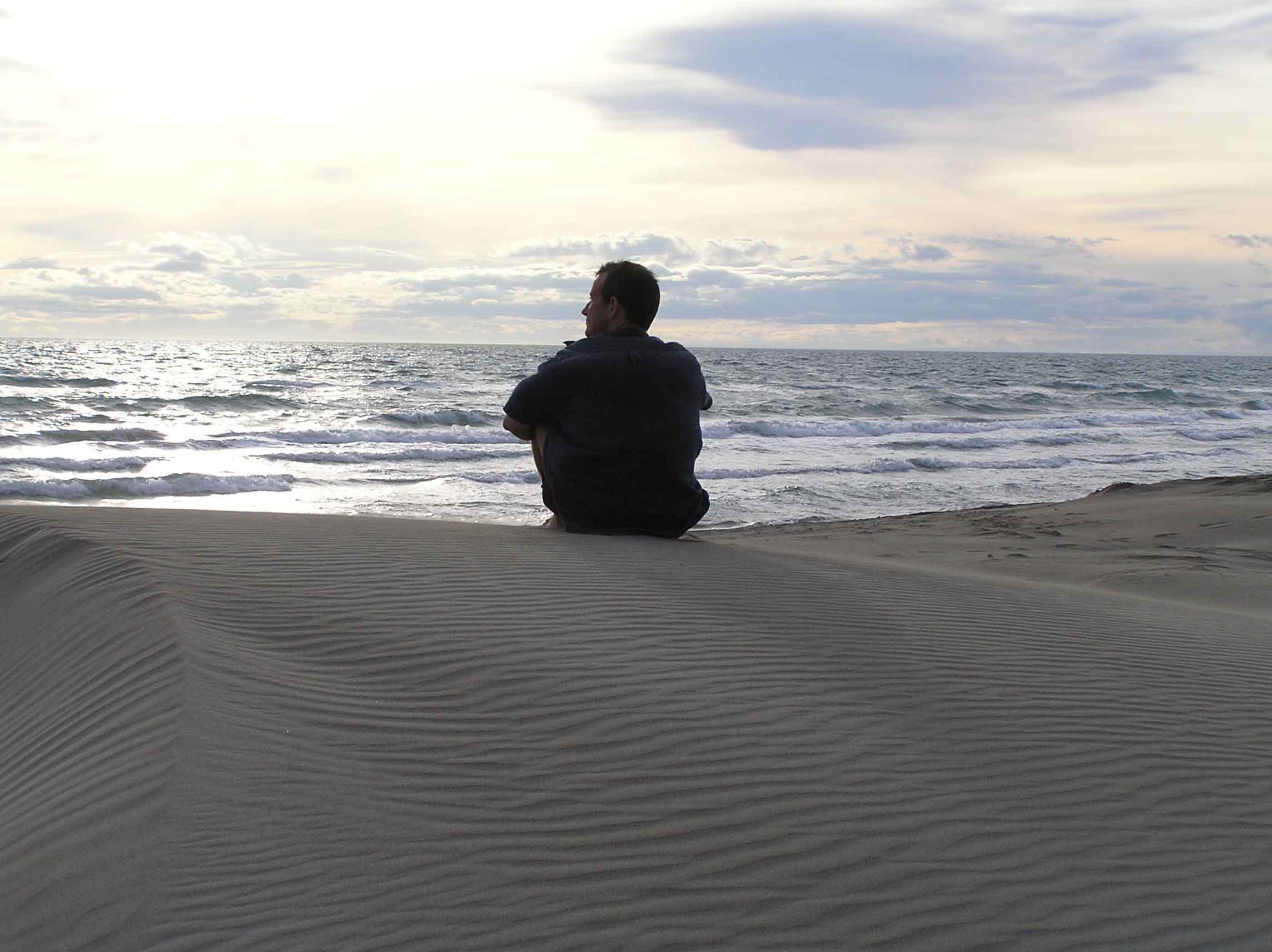
The Power of Solitude


The Power of Solitude

Jean Louise Quino/Diabetic Products


Just two days ago, I was invited to join an activity which was aimed to show something about an essential human tendency. I didn't know what it was at first but because most of my friends decided to attend, I decided to give it a try.


When we arrived, I was surprised to find that there were many participants. While waiting for the activity to start, we spent our time waiting by talking with each of our circle of friends. Moments later as we were about to forget the reason why we were gathered, one of the participants stood up and and asked for our attention. I noticed him earlier but didn't know he was the moderator because he appeared to be just like the participants.


Then he gave us the instructions. He would call some of us and ask each of us the same two questions. He said that anyone who would mention the first question or the answer to it or anything related to it will ruin the whole activity. However, he encouraged us that we talk about our answers to the second question while he was still calling us one by one.


So he began to call us one by one. There was that certain urge to ask about the first question from those whom he had called. I also learned that the second question was about what we think would be the single rule that all people from different point of views and backgrounds would follow in order to promote peace for all.


It was indeed an interesting question. It sure made us have a great deal of discussion while waiting. Some said that the single rule would be to love God above all.  Some said it's the Golden Rule which says "Don't do unto others what you don't want others to do unto you". Still some others said love one another as you love yourself. Three participants were starting an argument among themselves that their rule is much more supreme than the others.


I was beginning to be enticed to join their argument when I was called by the moderator to enter the room. The room was very quiet. I can only hear the voice of the moderator. The room was also very dark and I ccouldn't see a thing. The moderator told me to render myself alone and enter into a state of total solitude before answering his first question. He told me to return to my basic form so that I would not base my answer from what other people think or what my teachers or influential persons told me. He told me that the answer is already in me and that I already know it. He also warned me that the correctness of my answer is based on my projection of solitude.


And so his question was:"Where did you come from and where are you going?"


I thought the answer to that question was very easy. When I was a child, I was taught that I came from heaven and to heaven I should return if I live a good life. But then, it was something that was taught to me. It took me quite a long time to answer that question.


After the moderator was finished calling all of us, he told us to have two hours break. During the break, we talked just about anything: school, work, family, business. Some shared some laughter. Others still haven't finished arguing about the second question. And not even one mentioned anything about the first question.


Later after the break, the moderator returned and gathered us once again. He told us that he would ask us the same two question not in the room but in the assembly. He began asking the last one he called, down to the first. I noticed that our answers varied in many ways. After that, he asked for another short break.


When we were gathered together again, he revealed to us that he has been recording everything that we said in the room and in the assembly. He played each participant's answer in the room and then in the assembly. We all noticed that we almost have similar answers for the first question while we were in the room but we varied when we were in the assembly. We also noticed that we were calmer in the room than in the assembly. Another disturbing observation is that, we seemed to forget what we said in the room because we answered differently in the assembly.


The moderator told us that solitude is as essential as unity because we seemed to have understood one another more deeply when we were alone in the room than when we were in the assembly. He further said that if we treat others as who they are in solitude, we can get rid of all the classifications we make about ourselves which would start some factions, divisions and wars.


So as I have been writing about searching first for the peace within before the healing of the physical body, it is of the same importance to seek first the unity that comes from solitude.


Finally, Kahlil Gibran poetically says,


There are those among you who seek the talkative through fear of being alone.
The silence of aloneness reveals to their eyes their naked selves and they would escape.
And there are those who talk, and without knowledge or forethought reveal a truth which they themselves do not understand.
And there are those who have the truth within them, but they tell it not in words.
In the bosom of such as these the spirit dwells in rhythmic silence.

Wednesday, May 16, 2012

Living and Dying Moment by Moment


Living and Dying Moment by Moment

Jean Louise Quino/Diabetic Products


She was lying there with a smile on her face as I entered her private room. Jessica, my childhood best friend had just given birth to a bouncing baby boy. I noticed her color had come back to her. Finally I had seen the last of her horrible ghastly paleness she had from her massive blood loss. She had survived a Cesarean delivery at a very young age of nineteen.

I decided to come to her to tell her something very important, while at the same time try my best not to tell something she would regret or be thankful of for the rest of her life. I had hoped I could have the chance to tell her the 'secret' of her survival in a way that would build her up.

The secret I was trying to keep from her until the right time was my encounter with a man of courage and honor who I believed has seen the very face of the Light of Life. I dare not mention his name, so I would just refer to him as Nameless.

It started when I received a call from Jessica's husband Mickey who at that time was rushing through a tough traffic along the highway. Jessica's waters had broke and he was no less than a two-hour trip away to get to Jessica. So I got up and rushed to Jessica's apartment which was only two blocks away from mine. As I was frantically helping my best friend walk through the hall, a scrawny young man found us and carried Jessica on his arms with such ease and at that moment, Jessica lost consciousness. 

I managed to get Jessica to the nearest hospital thanks to the young man who suddenly looked like he had grown mature since he carried my laboring friend.

My heart pounded like a thousand marching bands as I looked at my best friend through the delivery room window. The doctor had just told me that since she was unconscious, they would perform a Cesarean delivery for Jessica's baby. My heart sank even deeper into the abyss after the doctor said that she would be needing a lot of blood or else she or her baby would die-- and worse, I didn't know anyone who had a blood type AB.

Suddenly I found myself sitting down on the hospital floor with my heart filled with anguish and hopelessness until a rough hand took hold of my shaking right hand and stood me up. It was the brave young man who helped me.

"Don't worry, miss" he said, "I have a sufficient supply of blood type AB running though my arteries".

My soul was overcome with joy. The young man had helped us a lot and he was even willing to donate his blood! But when I took a more careful look at him, I thought he was too thin. He insisted though. Surprisingly, he passed the test and was eligible to donate his blood.

I had no idea that the next hours would possibly the most enlightening moment of my life. As Nameless' blood was siphoned to the blood bags, I had a chance to ask him a few questions.

"Why have you decided to help my best friend with so much?" I asked.

He just laughed. "I'm not helping anybody but myself alone", he said. His answer had me asking more questions about him.

I learned that he had been a member of a very rich family but he had decided to live by his own in the streets, feeding only on what is free. He never had any money since he left his previous life. Despite that, I only saw a radiance of pure joy and freedom in his eyes as he relayed his story to me.

I also learned that he once had Type 1 diabetes while he was living with his family. He had fallen into a deep coma for three days until a miracle happened on the third day when after being at the brink of death, he suddenly sat up fully healed.

When I heard he once had diabetes, a part of me was disappointed at him for not telling the nurses of his medical history. But why tell me at that time?

As though he knew what I was thinking, he smiled at me saying the words that would go on and on in my mind.

"People are so afraid of death because they are bound to their lives. What they do not know is that the life they are currently having is not the only life they have. You may see that one man's death is another man's life but the truth is more than just heroism, because each and all of us dies and being born moment by moment".

I was so mesmerized by the depth of his words that I never thought those would turn out be his last. First, I noticed twitching, then a mild seizure, then difficulty in breathing. The next thing I knew, his breathing stopped. I frantically called the nurses to the room. They rushed over to attend to Nameless but it's too late. His heart had stopped beating. It was a heart attack, a very rare and isolated case in the history of blood donations. 

Just as they were taking Nameless' body out of the room, another nurse ran into the room taking the blood bags. Jessica had given birth and was losing a lot of blood, fast.

I was in a state of shock. Things were happening too fast. A man had just died in front of me and my best friend was at the brink of death. I was about to break down until I heard a baby crying from the delivery room. 

"Life", I thought. I was so preoccupied on thinking about death that I forgot to think about life. Nameless had been living a life that everyone else in this world is running away from. He managed to live through the hardships and being alone. To him, life here is not only about surviving longer until the day of death, it is living life in abundance as it truly is. That's what enabled him to more than just conquer his diabetes, he conquered death itself as feared by many. He conquered death so emphatically that offering his blood is nothing to him, even if it meant death. He had said that the life he currently have is not the only life he had. He has the Life.

I went out from the room with much empowerment. I learned that Jessica had lost so much blood that all the blood that Nameless donated was nothing short of 'sufficient' as he confidently said. Had Nameless kept his blood to himself, it wouldn't be enough for Jessica to live. He risked it all, up to the last drop for my best friend and her baby to live.

Now her baby boy grew up to be a good soccer player, a virtuoso pianist, and a happy youth. I still haven't told Jessica about Nameless, but sure I told her about Life.

Just three days ago, I witnessed an accident. A boy playing on the street was hit by a speeding car. I ran to help the boy. A street sweeper who was passing by also ran towards the boy. As we helped the boy up, I accidentally hit and took off his hat. And I could not believe my eyes.

It was Nameless.

Friday, May 11, 2012

Self-Transcendence: The Highest Need


Self-Transcendence


Jean Louise Quino/Diabetic Products


Resounding from the wisdom of Abraham Maslow's hierarchy of needs, self-transcendence is sitting at the top of the pyramid. Being at the top of the pyramid means it is of highest importance but only attained by the least number of surviving organisms. 


But what really is self-transcendence? Why is it more important than physiological needs, safety and security, love and belongingness, and self-esteem?


Before delving deeper into those questions, first we must know what we need them for. 


We need physiological needs for our perishable bodies to maintain itself. 
We need security and safety for our minds to be calm. 
We need love and belongingness for our emotions to be in tact. 
We need self-esteem for our will to give reason for our wisdom to push us to move into action. 
And we need self-transcendence to realize we don't need anything because we are everything.


Self-transcendence has been subtly praised, taught and emphasized in all of the world's religions. In Christianity, one who has attained self-transcendence is called a Christ; in Buddhism, a Buddha; in Taoism, one who has seen the Tao; and in Islam, a Pure Muslim. However, most of the great personalities in those religions did not achieve self-transcendence by following a strict observance of religion. In fact, Lao Tzu even stated in the very first sentence of his classic writing Hua Hu Ching "I reach the Integral Way of uniting with the great and mysterious Tao. My teachings are simple; if you try to make a religion or science of them, they will elude you". 


We need things to reinforce the existence of our accepted selves. For example we need food to prolong the existence of our physical bodies because we consider our bodies as our very own selves.  Then we go up to a higher need because we have known ourselves to be more than just physical bodies, but also electromagnetic minds. So if we know ourselves more, we climb up to a higher step in the pyramid until we reach its peak-- knowing who we really are or self-actualization.


When we have come into self-transcendence, we immerse ourselves into the harmonious song of the universe which is self sufficient. The universe at large still exists in its beauty no matter how chaotic the minds of the people on earth are. The stars remain beautiful in space even though we can't see it in a cloudy night or in a bright city. They all stay in their orbits along with their planets in with great order and harmony.


With such oneness and harmony of your existence, it replenishes your will, set your emotions free, calms your mind and aligns your body to a perfect health. Your DNA will respond to the harmony you have attained will themselves become harmonious, ever looking for the unity of all the parts of your body. But then again, one who has attained self-transcendence does not worry of having anything else. He has become an immortal and thus he will not die or perish.


And when you have come to self-transcendence, you will know that it's not at all the highest need for there is no hierarchy at all.